Asphalt is known for its durability, but that doesn’t mean it’s indestructible. Oil, gas, and chemical spills can damage your asphalt and shorten its lifespan. However, addressing spills quickly can help prevent costly deterioration and minimize their impact on your pavement.
If you’re dealing with an oil, gas, or chemical spill on your asphalt pavement, keep reading to learn what types of damage can occur, signs of damage to be on the lookout for, why it’s so important to clean the spill promptly, and the role of asphalt professionals like Precision Asphalt Maintenance.
How Asphalt Is Made and Why It Matters
First, let’s go over how asphalt is made and why it matters in the context of chemical spills. Asphalt is made of a crushed aggregate — stone, sand, and gravel — mixed with a material called bitumen, which is a petroleum byproduct that acts as a binder. The bitumen holds the aggregate together and creates a solid surface you can drive and walk on.
When petroleum-based substances like diesel, gasoline, and motor oil are spilled on the asphalt, it interacts with and weakens the binder, dissolving the bonds holding the pavement together. The severity of the damage depends on the type of substance, how much of it was spilled, the temperature, and how long it remains in contact with the asphalt.
How Oil and Petroleum Products Damage Asphalt
Now, let’s take a closer look at how oil and petroleum products damage asphalt.
- Softening the asphalt binder: Oil can penetrate the asphalt surface and soften the binder, making the pavement more vulnerable to vehicle traffic and deformation.
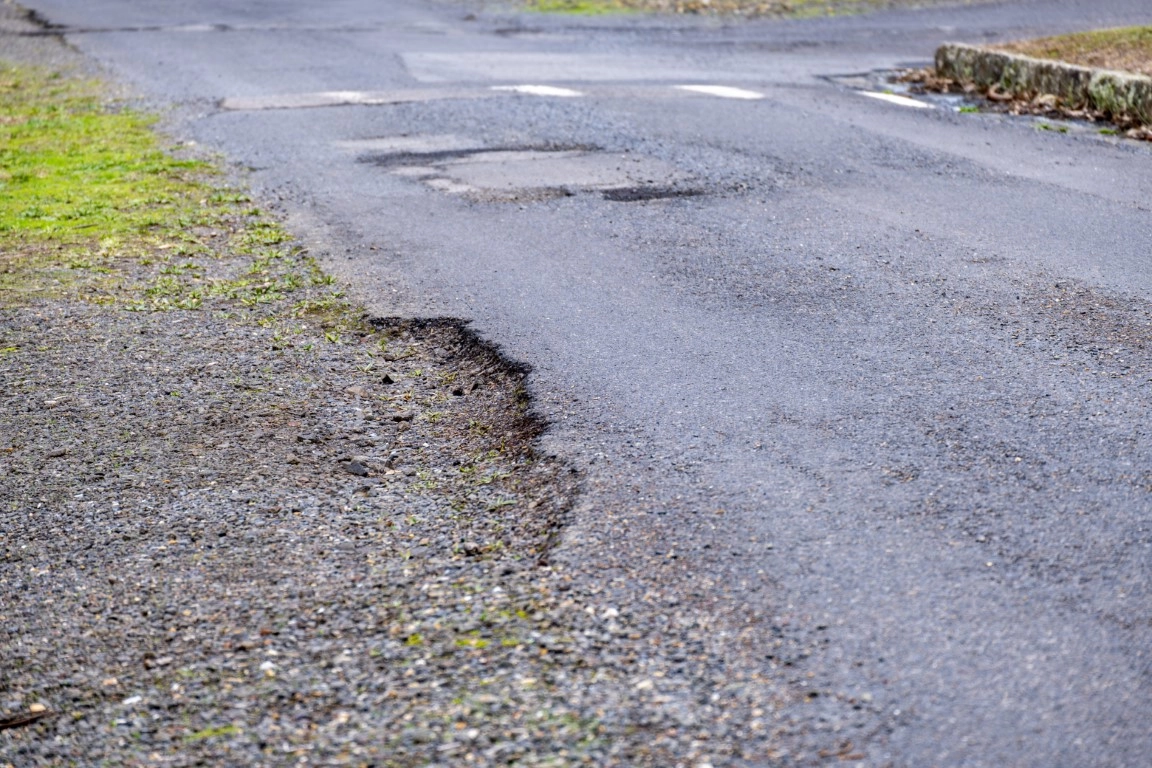
- Breaking down the pavement structure: Prolonged exposure to oil and petroleum products can cause the binder to lose its ability to hold the aggregate together, which can eventually contribute to raveling and surface deterioration.
- Creating weak spots: Repeated spills in the same area — such as around fueling stations, loading zones, fleet parking, and industrial facilities — can create localized pavement failures.
What Gasoline and Diesel Can Do to Asphalt
Gasoline and diesel can have a similar effect to motor oil. They, too, can penetrate asphalt and affect the binder. It doesn’t have to be one large spill to cause damage, either — frequent small leaks from vehicles can gradually deteriorate the pavement over time, even if the damage seems insignificant at first.
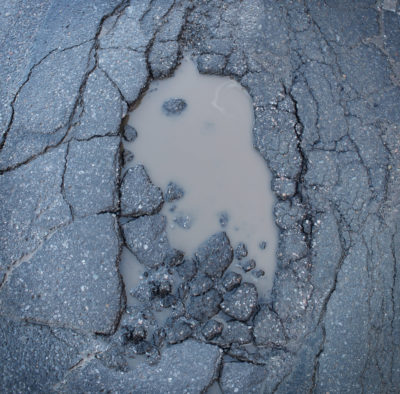
Areas exposed to repeated fuel contamination may deteriorate faster than the rest of the pavement, developing soft spots, cracking, potholes, and raveling.
Chemical Spills and Asphalt Damage
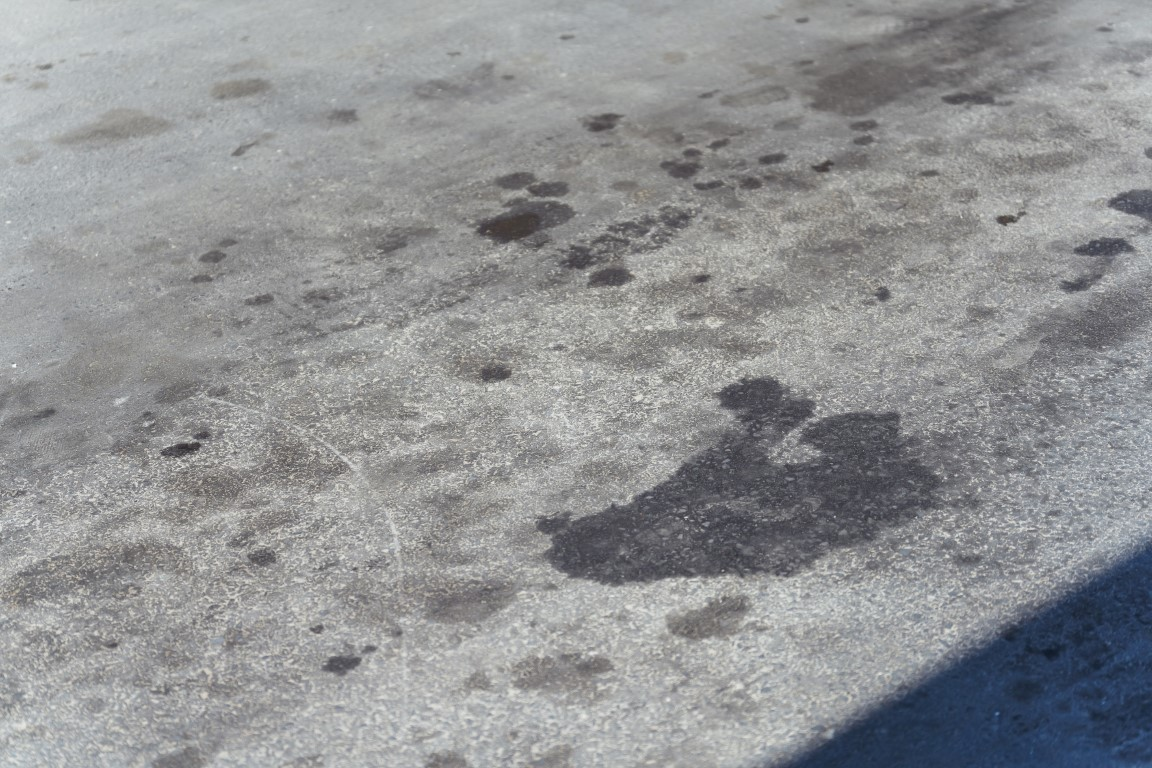
Chemical spills — including solvents, industrial chemicals, and other aggressive substances — may soften, dissolve, or degrade asphalt components. It can also affect sealcoating and other pavement treatments.
However, not all chemical spills affect asphalt in the same way. It depends on the type of chemical and how it reacts with the asphalt components. That’s why seeking a professional evaluation after significant chemical spills is so important.
Signs a Spill Has Damaged Your Asphalt
It may not always be obvious when an oil or chemical spill has occurred. Be on the lookout for these signs that a spill has damaged your asphalt:
- Dark or discolored patches that don’t go away with cleaning
- Soft, tacky, or unusually flexible pavement
- Loose aggregate or areas where the surface is beginning to ravel
- Cracking around or within the contaminated area
- Depressions or rutting where vehicles regularly travel
- Potholes or pavement failures after a major spill
- Explain that visible damage may not appear immediately after contamination
Why Prompt Spill Cleanup Matters
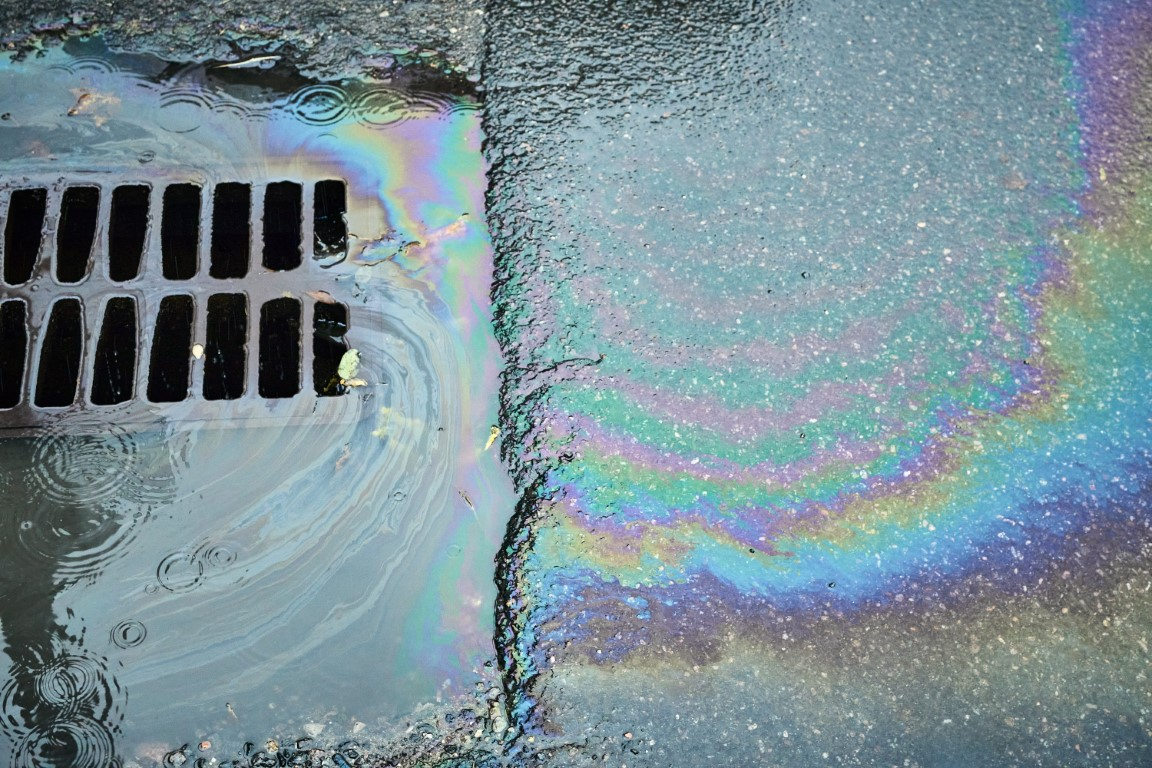
The longer oil, fuel, or chemicals remain on the pavement, the more opportunity they have to penetrate the surface. That’s why it’s crucial to contain the spill and prevent it from spreading. Avoid washing the spill into a nearby drain, though, as this can create drainage problems and impact the environment. Make sure you follow the appropriate spill-response procedures as outlined by the EPA and the ACS.
Can Damaged Asphalt Be Repaired?
With minor surface contamination, prompt cleanup may prevent significant damage. It’s still a good idea to seek a professional evaluation to make sure everything is okay. With localized damage, you can typically remove and replace the compromised asphalt. Extensive damage may require larger sections to be replaced.

When to Call the Professionals at Precision Asphalt Maintenance
It’s a good idea to call Precision Asphalt Maintenance:
- After a large oil, fuel, or chemical spill
- When pavement becomes soft, sticky, or visibly deteriorated
- When cracking, rutting, raveling, or potholes appear around a contaminated area
- When repeated spills are occurring in the same location
We’ll determine what needs to be done to restore the pavement, whether it’s localized patching or complete resurfacing. You can trust us to get the job done right.